Also on Bank Holidays UK: What Is a Bank Holiday? UK Definition Explained · How Many Bank Holidays Are There in the UK? · Bank Holiday vs Public Holiday — What’s the Difference?
The UK has added extra bank holidays for royal jubilees several times: 1977 (Queen Elizabeth II’s Silver Jubilee), 2002 (Golden Jubilee), 2012 (Diamond Jubilee), 2022 (Platinum Jubilee).
Silver Jubilee — 1977
Tuesday 7 June 1977 was made a bank holiday to mark Queen Elizabeth II’s 25 years on the throne. Combined with the Spring Bank Holiday on Monday 6 June, this created a four-day weekend.
Golden Jubilee — 2002
The bank holiday was declared for Monday 3 June 2002, the Spring Bank Holiday was moved to Tuesday 4 June, and Wednesday 5 June was added — creating a five-day Jubilee weekend.
Diamond Jubilee — 2012
Tuesday 5 June 2012 became an extra bank holiday alongside Monday 4 June (Spring Bank Holiday moved). Four-day weekend.
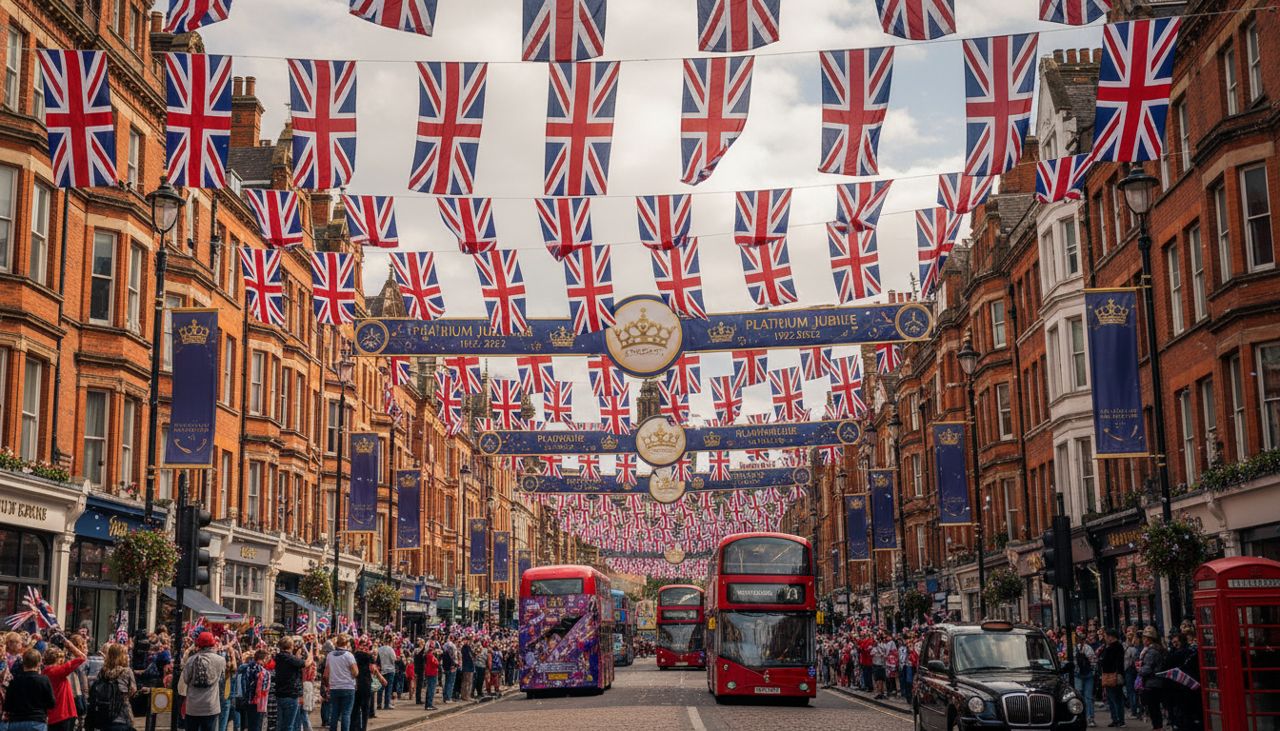
Platinum Jubilee — 2022
Thursday 2 June and Friday 3 June 2022 were both bank holidays — the largest jubilee bank holiday addition in UK history. Four-day weekend across the country.
What’s next?
King Charles III’s coronation on Monday 8 May 2023 was an extra bank holiday. Future royal milestones — silver/golden anniversaries, coronations, state funerals — typically trigger one-off bank holidays declared by proclamation.
Frequently asked
What’s the answer for ‘jubilee bank holiday’?
A short history of jubilee bank holidays — from 1977 to 2022.
Are these dates confirmed?
Yes — UK bank holiday dates are confirmed by GOV.UK. Royal Proclamation can move them only in exceptional cases.
Where can I see the full year?
Bank Holidays UK 2026 for the live calendar.